Marriott Bonvoy — Promotion Registration
Overview
Marriott Bonvoy contained a complex ecosystem of member experiences across loyalty, rewards, and stays. My focus was on identifying high-value system improvements that justified cross-functional investment.
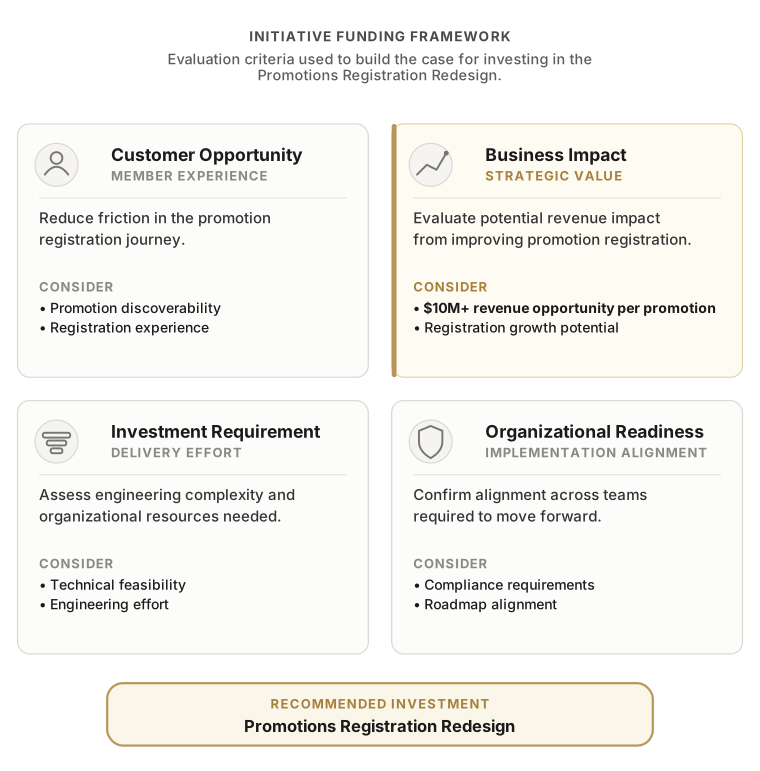
Instead of starting with a predefined project ticket, I evaluated opportunities across the platform to determine where UX could have the greatest revenue impact. Promotions emerged as the strongest candidate because individual campaigns frequently generated more than $10M in revenue.
Marriott Bonvoy Promotions
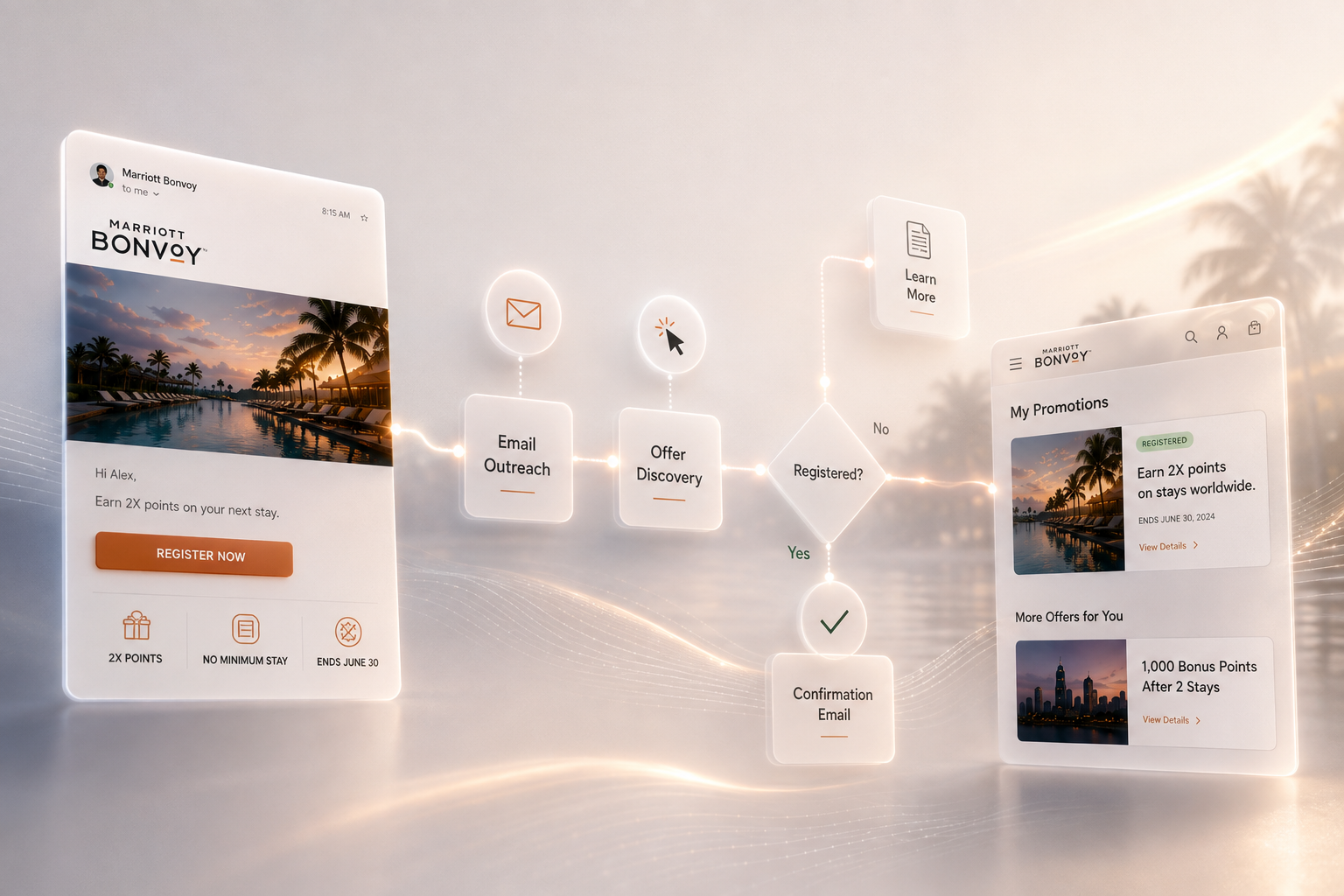
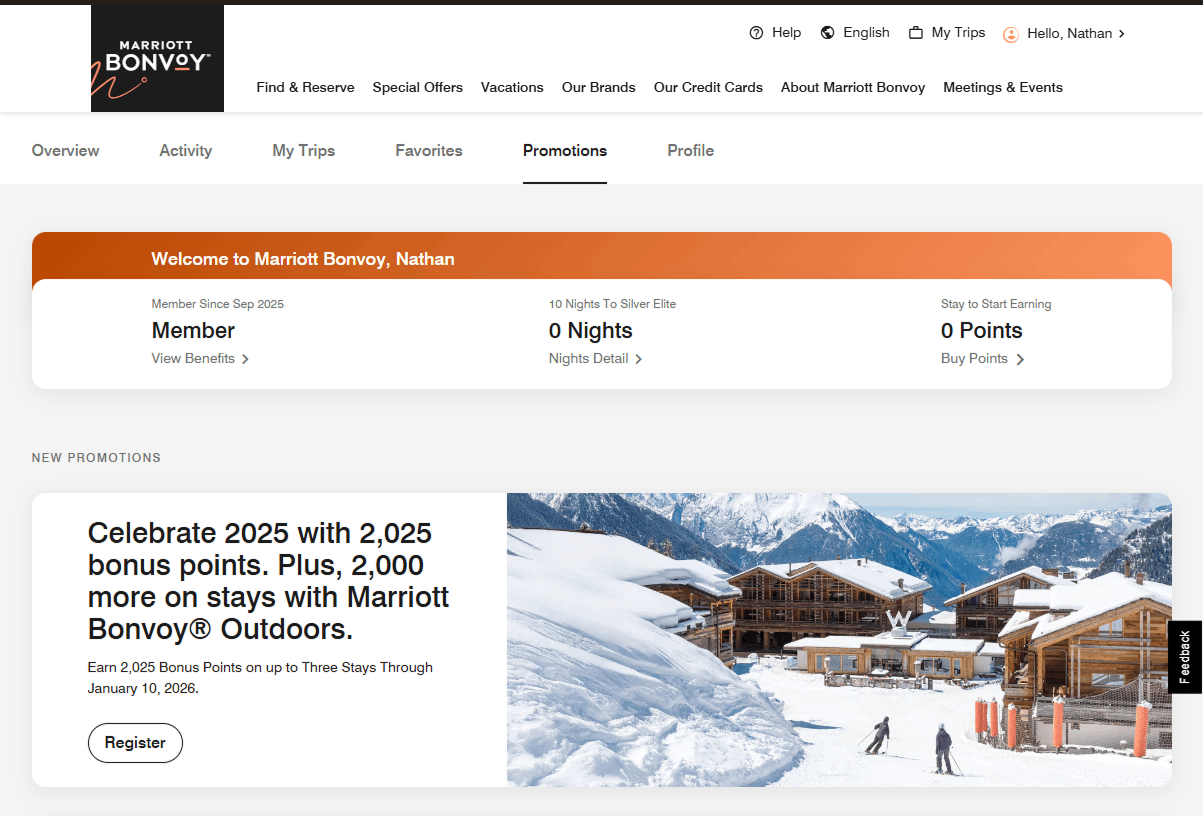
A personalized promotions experience designed to help members discover and register for available offers.
Identifying High-Value Opportunities
Marriott Bonvoy contained many potential opportunities, but identifying a good UX improvement wasn't enough. I evaluated each initiative based on business value, implementation effort, organizational readiness, and strategic impact to select projects that justified cross-functional alignment across Product, Engineering, and Business operations.
Why Promotions
Promotions were personalized offers tied to each member's account and activity. That personalization shaped how members discovered promotions, how eligibility was determined, and ultimately how the registration experience was designed.
Understanding the Experience
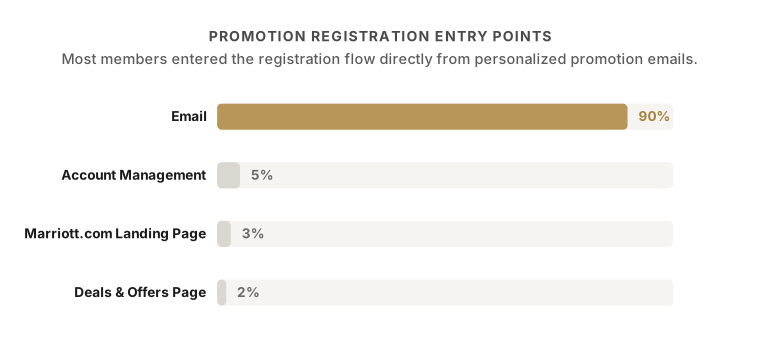
I expanded my analysis beyond the web interface to understand how members actually discovered and registered for promotions across channels. Telemetry confirmed that approximately 90% of promotion traffic originated from personalized emails.
Challenging the Assumption
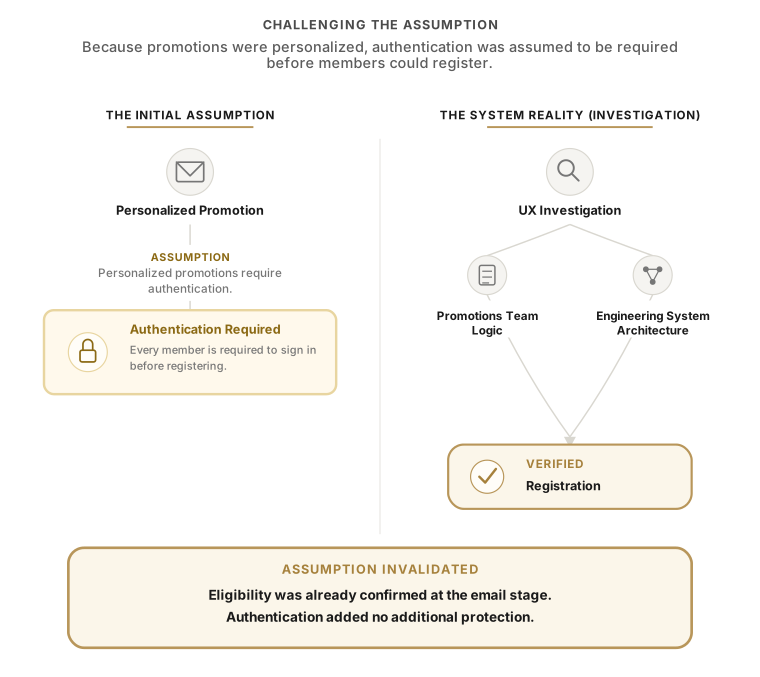
Because promotions were personalized, authentication had become an accepted part of the registration experience. My investigation focused on understanding how eligibility was actually enforced and whether authentication played a meaningful role in that process. I worked with the Promotions and Engineering teams to trace how eligibility, registration, and the existing flow operated before determining whether authentication was truly necessary.
Validating the Solution
Validation Criteria
Removing authentication wasn't simply a UX decision. Before implementation, each validation criterion was reviewed by the stakeholder responsible for that area to confirm the redesigned flow preserved business requirements, security, compliance, and technical feasibility.
| Validation Criteria | Description |
|---|---|
| Promotion Visibility | Members should only be able to see promotions available to them. |
| Promotion Registration | Members should only be able to register for promotions available to them. |
| Personalization | Members should continue to receive offers based on their account and activity. |
| Security | The updated flow could not introduce security risks. |
| Compliance | The approach needed to meet legal and regulatory considerations. |
| Technical Feasibility | The solution needed to work within existing platform capabilities. |
| Business Investment | The value needed to justify the cost and effort required from the Promotions Team. |
Stakeholder Validation
Each validation criterion was reviewed by the stakeholder responsible for that area before implementation.
Promotions Team
- Promotion Visibility
- Promotion Registration
- Personalization
- Business Investment
Engineering
- Technical Feasibility
Legal
- Compliance
DevSecOps
- Security
Registration Flow
Authentication-Gated Registration
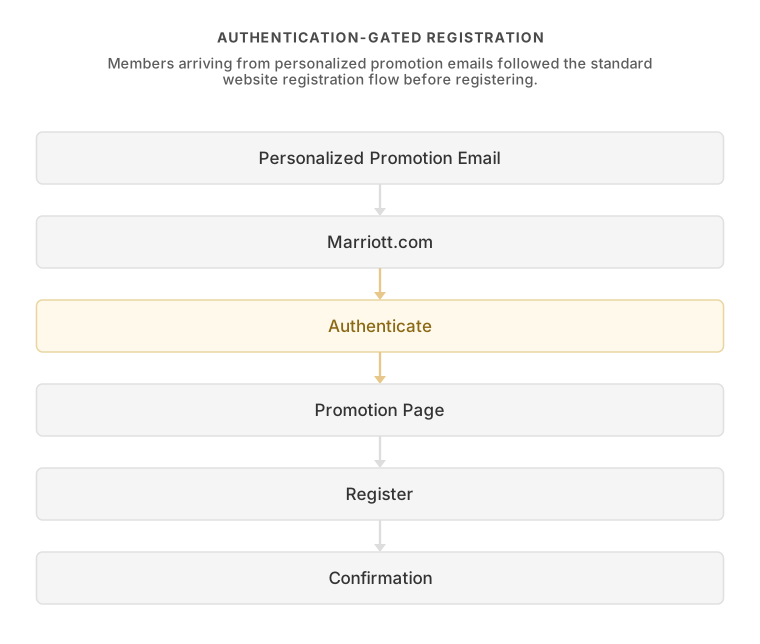
Members arriving from personalized promotion emails were routed through the standard website registration flow, where they were required to authenticate before registering. For security reasons, Marriott only remembered usernames, requiring members to re-enter their password before continuing.
Authentication-Free Registration
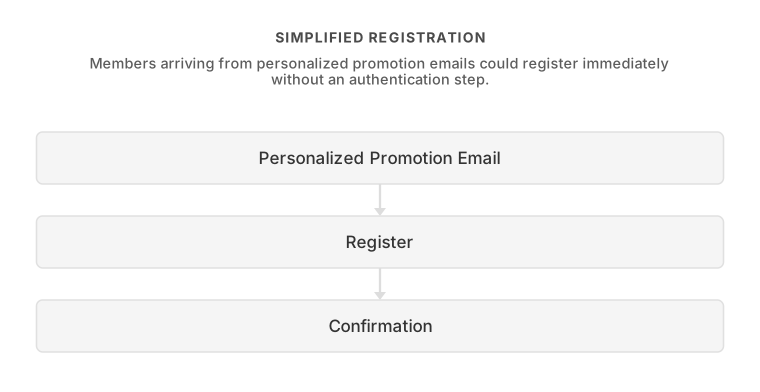
Once my investigation confirmed that authentication wasn't enforcing eligibility, I redesigned the registration flow around the existing business rules rather than the existing interface. Members arriving from personalized promotion emails could register directly while continuing to access only the offers available to them. The redesigned experience preserved the personalized promotion system without requiring an additional authentication step.
Results
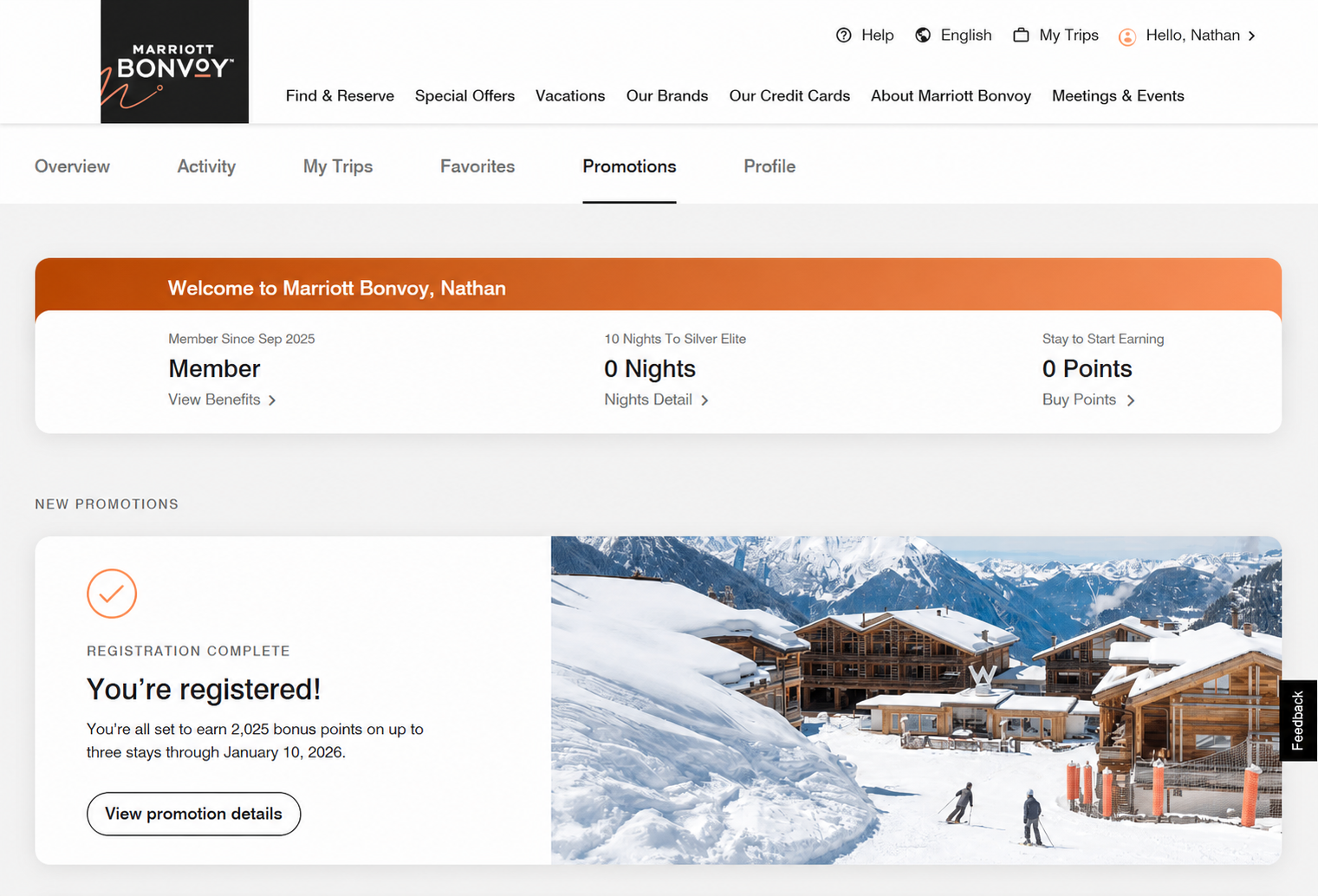
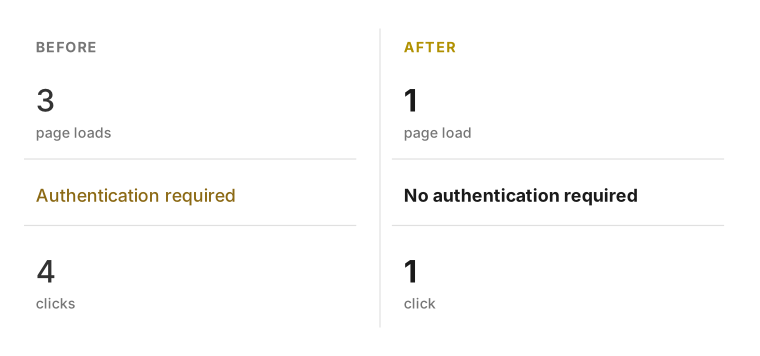
Members arriving through personalized promotion emails could now register immediately without authenticating. The simplified journey reduced page loads from three to one, reduced clicks from four to one, and increased promotional registrations by 30%.
Impact
Key Takeaways
This project reinforced the importance of understanding how experiences span channels, business rules, and system behavior before attempting to improve the interface. Looking beyond the website revealed an opportunity that would not have been visible from the registration flow alone.
More importantly, it demonstrated that some of the highest-impact UX improvements come from validating long-standing product assumptions. By partnering with Product, Engineering, Legal, and DevSecOps, I confirmed the underlying business rules before redesigning the experience, resulting in a simpler workflow without changing how the system actually operated.